
GPS tracking for construction equipment and tools: how to prevent theft and recover assets
Heavy equipment GPS trackers: a buyer’s guide to battery life and secure tracking
A skid steer left overnight on a remote job site. A generator running for weeks in a field with no power hookup. A rented excavator that’s supposed to be billed by the hour but nobody knows how many hours it actually ran. These are the situations that break standard vehicle GPS trackers, and they’re exactly the problems a purpose-built heavy equipment GPS tracker is designed to solve.
If you manage machinery for a construction, heavy civil, mining, or rental operation, two things matter more than anything else when you buy a tracker: how long it runs without maintenance, and whether your location data stays private. This guide walks through both, compares the real tradeoffs between battery-powered and hardwired units, and gives you a clear way to decide what to buy.
What a heavy equipment GPS tracker is
A heavy equipment GPS tracker is a location device built specifically for high-value, off-road machinery: excavators, dozers, wheel loaders, generators, light towers, compactors, and similar assets. It reports the machine’s position, movement, and often its runtime, so you always know where your equipment is and how it’s being used.
What sets it apart from a standard vehicle tracker is the environment it has to survive. A car tracker assumes constant 12V power, regular driving, and a garage-friendly climate. Heavy equipment breaks every one of those assumptions. Machines sit idle for weeks or months, get parked on sites with no reliable power, and endure dust, vibration, water, and temperature swings that would kill a consumer-grade device.
Because of that, two factors dominate the buying decision for machinery: multi-year battery life so the tracker keeps reporting without anyone touching it, and encrypted location data so the whereabouts of your fleet can’t be intercepted or misused. Everything else builds on those two foundations.
Why standard vehicle trackers fall short on machinery

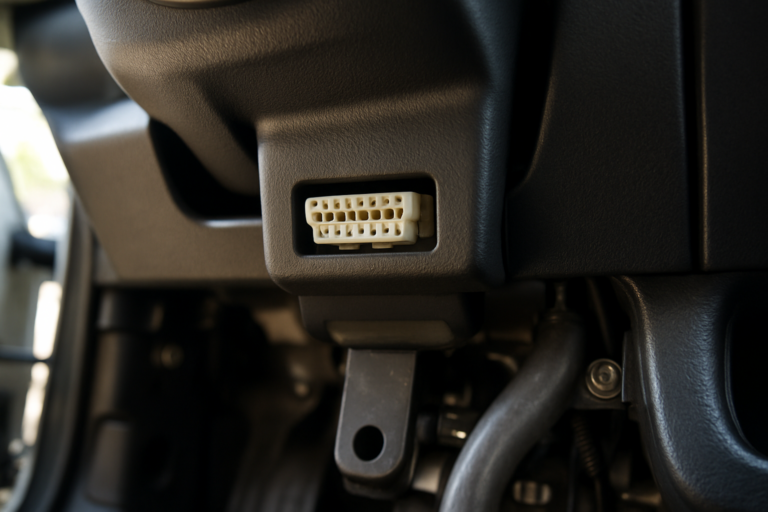
Most GPS trackers on the market are designed around a vehicle’s electrical system. They plug into an OBD port or wire into the battery and assume they’ll get topped up every time the engine runs. That works for a delivery van driven daily. It fails for equipment.
Heavy machinery frequently sits on a remote job site for months at a time with the engine off and no power source nearby. A tracker that depends on the machine’s battery either drains it or dies itself. When the asset is most vulnerable to theft, the tracker goes dark.
Remote sites also introduce coverage challenges. Equipment often works in rural areas, quarries, and construction zones where cellular signal is spotty. A tracker built for machinery needs to handle intermittent connectivity gracefully, storing and forwarding data instead of losing it.
Then there’s the physical abuse: constant vibration, airborne dust, mud, rain, and heat. Consumer trackers aren’t sealed or hardened for that. And because unattended machinery is a prime theft target, features like instant movement alerts and discreet mounting matter far more than they do on a vehicle that’s rarely left alone.
Features that matter most for tracking heavy machinery
When you compare trackers for equipment, weigh these features in order of what actually affects your operation:
- Battery life measured in years, not weeks. This is the single biggest differentiator. A tracker that lasts up to 10 years on a single battery can be installed once and left alone. Short-life units create a maintenance chore that scales badly across a fleet.
- Rugged, weatherproof housing. Look for sealed enclosures rated against dust and water, and hardware that shrugs off vibration. If the device can’t survive the job site, nothing else matters.
- Reliable connectivity in remote areas. Broad cellular coverage and the ability to buffer data during dead zones keep your location history intact.
- Geofencing and movement alerts. Draw a boundary around a site and get notified the instant a machine crosses it or starts moving when it shouldn’t.
- Theft detection and recovery support. Real-time positioning and unauthorized-movement alerts turn a stolen-asset nightmare into a fast recovery.
- Encrypted location data. Your fleet’s movements are sensitive. Encryption keeps that data out of the wrong hands, which we’ll cover in detail below.
Battery-powered vs. hardwired trackers
This is the decision that trips up most buyers, so let’s make it simple. The core tradeoff is between a self-contained device you mount and forget, and a wired device that draws steady power for more frequent reporting.
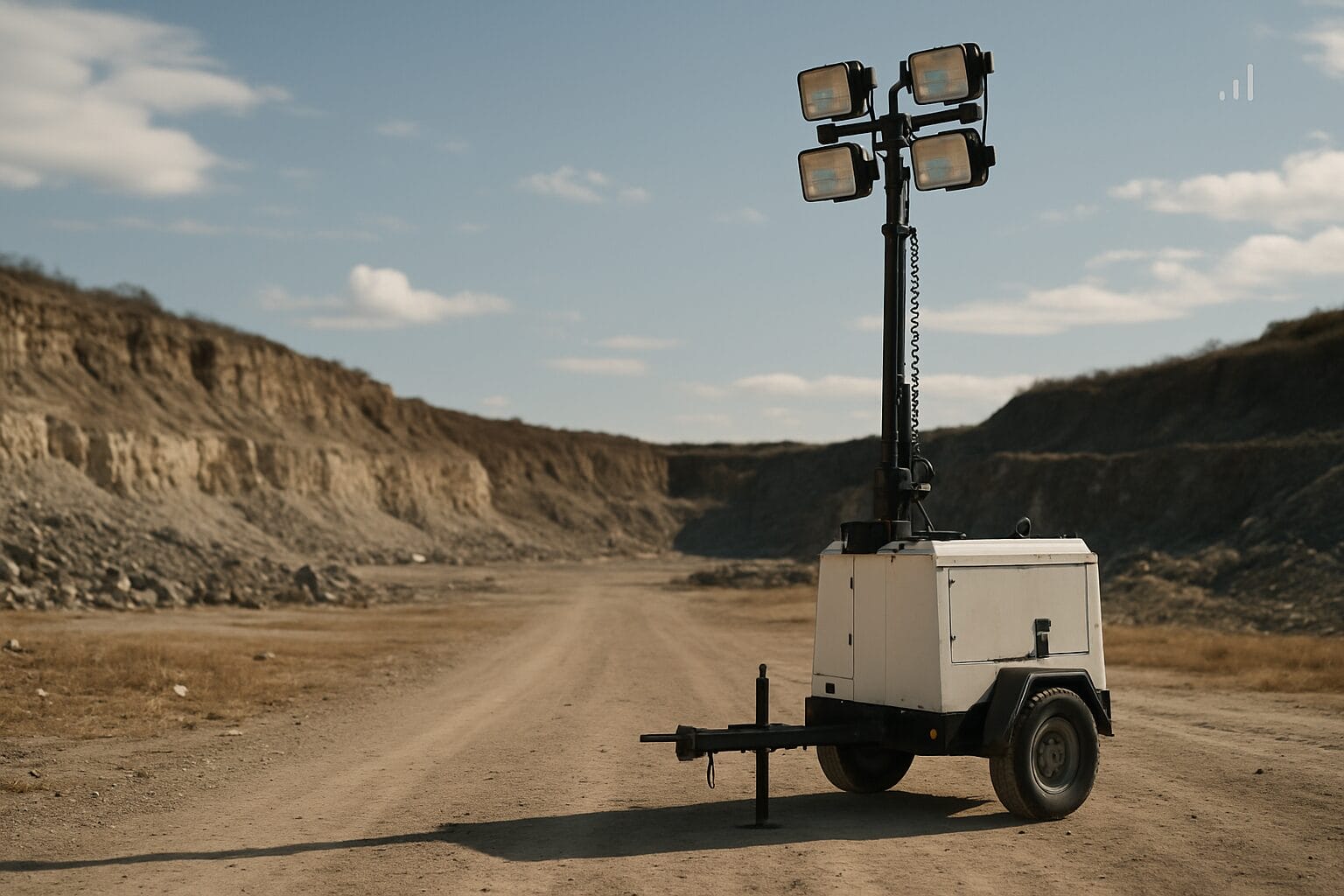
Battery-powered trackers are self-contained. They install in minutes with no wiring, and they keep reporting whether the machine is running or parked for six months. They’re the right choice for equipment that sits idle for long stretches or has no accessible power source: generators, light towers, trailers, attachments, and any asset that spends more time parked than working.
Hardwired trackers tap into the machine’s electrical system. Because they draw continuous power, they can ping location and engine data very frequently, which suits machinery in near-constant use with reliable power. The tradeoff is a more involved install and dependence on the machine’s battery.
Here’s a simple decision framework based on duty cycle:
- Sits idle a lot, no steady power, spread across remote sites? Battery-powered.
- Runs most days, has reliable power, needs high-frequency data? Hardwired.
- Mixed fleet? Most operations lean battery-powered for the flexibility and zero-maintenance install, and reserve hardwired units for their busiest machines.
For the majority of heavy equipment, which spends far more hours parked than working, battery power wins. LoneStar battery trackers with up to 10-year life are built for exactly this: intermittent-use and idle machinery that you can’t afford to babysit. The right heavy equipment GPS tracker selection ultimately comes down to your duty cycle, not a one-size-fits-all recommendation.
How long battery life lowers total cost of ownership
Battery life isn’t just a spec sheet number, it’s a direct cost lever. Every time a tracker needs a battery swap or recharge, someone has to drive to the equipment, locate it, and service the device. On a machine parked two hours from the yard, that’s most of a workday for one small task.
A tracker with up to 10-year battery life eliminates that recurring trip almost entirely. You install it once and it reports for the better part of a decade. Multiply the labor and windshield time you save across a fleet of dozens or hundreds of assets, and the savings dwarf the price of the device.
Long battery life also means predictable, install-and-forget reliability. You’re not tracking service dates for hundreds of trackers or discovering a dead unit only after a machine goes missing. Across a large fleet, that predictability makes your total cost of ownership far easier to plan.
Preventing theft and improving recovery
Equipment theft is a persistent, expensive problem. Machinery is valuable, often uninsured against total loss, and frequently left unattended overnight or over weekends. Thieves know this.
A GPS tracker changes the odds in several ways. Movement and geofence-exit alerts notify you the moment a machine leaves its assigned area or starts moving outside working hours, so you learn about a theft in minutes instead of the next morning. Real-time location gives law enforcement an exact position to recover the asset, which dramatically improves recovery rates and speeds.
Placement matters too. Mounting the tracker in a discreet, hidden location makes it much harder for a thief to find and disable, so it keeps reporting even after the machine is taken. A battery-powered unit is especially useful here because it doesn’t need to be near the wiring, giving you more freedom to hide it well.
Why encrypted location data matters
Most buyers never ask how their tracking data is protected, and most vendors never bring it up. That’s a problem. An unencrypted tracker transmits your equipment’s location in a form that can potentially be intercepted, and that data is more sensitive than it first appears.
Consider who benefits from knowing where your machines are: thieves scouting which sites hold unattended, high-value equipment; competitors mapping where you’re bidding and working; or anyone who wants to exploit your operation’s movement patterns. Your fleet’s location history reveals your job sites, your schedules, and your business activity.
LoneStar encrypts all tracking data as a standard practice, not a paid add-on. That means your equipment’s positions and movement patterns stay protected from interception and misuse. If privacy and security matter for your assets, encryption should be a non-negotiable requirement, the same way it is for the consumer devices we build. Our approach to protecting user data carries across everything we make, including our subscription-free GPS dog trackers.
Using tracking to improve utilization, maintenance, and rental billing
Theft protection often justifies the purchase, but the day-to-day value comes from what tracking tells you about how equipment is actually used.
Utilization: By measuring engine hours and real runtime, you can spot machines sitting idle while another crew rents the same type of equipment. That visibility lets you reallocate assets across job sites instead of over-buying or over-renting.
Maintenance: Service scheduled on real runtime beats guesswork or calendar dates. When you know a machine’s actual engine hours, you service it at the right interval, avoiding both premature maintenance and costly breakdowns from overdue service.
Rental billing: For equipment rental fleets, tracking turns billing into a precise, defensible process. Bill by actual usage hours or by location, resolve disputes with hard data, and catch equipment that’s off-hire but still in the field.
Allocation: With a fleet-wide view, operations directors can see where every machine is and how hard it’s working, making it far easier to balance assets across multiple sites.
Installation and ongoing costs
Installation depends on the tracker type. A battery-powered unit is genuinely mount-and-go: secure it in a discreet spot, confirm it’s reporting, and you’re done, no electrician, no downtime. A hardwired unit takes more effort, requiring a connection to the machine’s electrical system and a bit of planning around routing and concealment.
On the ongoing side, expect a subscription for cellular data and access to the tracking platform. This is normal for equipment tracking, since the device needs a data connection to report position and the platform is where you view locations, set geofences, and pull reports.
Weigh that subscription against what it protects. A single prevented theft, or a single machine recovered, typically covers years of subscription cost. Add the utilization gains, accurate rental billing, and smarter maintenance, and the return is easy to justify across a fleet.
Choosing the right tracker for your fleet
Pulling it together, here’s how to decide:
- Match tracker type to duty cycle and power. Idle or power-less equipment favors battery-powered units; constantly running machines with steady power can support hardwired.
- Account for your fleet size and mix. A yard full of varied equipment usually benefits from the flexibility and zero-maintenance install of battery trackers, with hardwired units where high-frequency data is worth the effort.
- Prioritize the three things that actually matter: multi-year battery life, rugged durability, and encrypted data. These separate a tracker built for machinery from a repurposed vehicle device.
LoneStar Tracking builds devices around exactly these priorities: up to 10-year battery life so you install once and forget it, rugged hardware for the job site, and encrypted data on every device to keep your fleet’s movements private. If you’re ready to protect and track your machinery, reach out to LoneStar Tracking to match the right units to your equipment and fleet size.
Frequently asked questions
How long does a heavy equipment GPS tracker battery last?
It varies widely by device. Many consumer-grade trackers last only weeks between charges. Purpose-built battery trackers last far longer, and LoneStar units offer up to 10 years on a single battery, which effectively makes them install-and-forget for the life of most equipment.
Can a GPS tracker work on equipment with no power source?
Yes. Battery-powered trackers are self-contained and don’t rely on the machine’s electrical system at all. That makes them ideal for generators, trailers, attachments, and any equipment parked for long periods without a power hookup.
Will a tracker help recover stolen machinery?
It significantly improves your odds. Instant movement and geofence-exit alerts tell you about theft within minutes, and real-time location gives law enforcement a precise position to recover the asset. Discreet mounting helps the tracker keep reporting even if the machine is moved.
Is my equipment location data secure and private?
With LoneStar it is. We encrypt all tracking data as a standard practice, so your equipment’s positions and movement patterns are protected from interception. Not every vendor does this, so confirm that any tracker you consider encrypts its data.
Do I need a subscription to use a heavy equipment GPS tracker?
Most equipment trackers require a subscription for cellular data and access to the tracking platform where you view locations and set alerts. The cost is typically minor compared to the value of theft prevention, accurate utilization data, and precise rental billing.