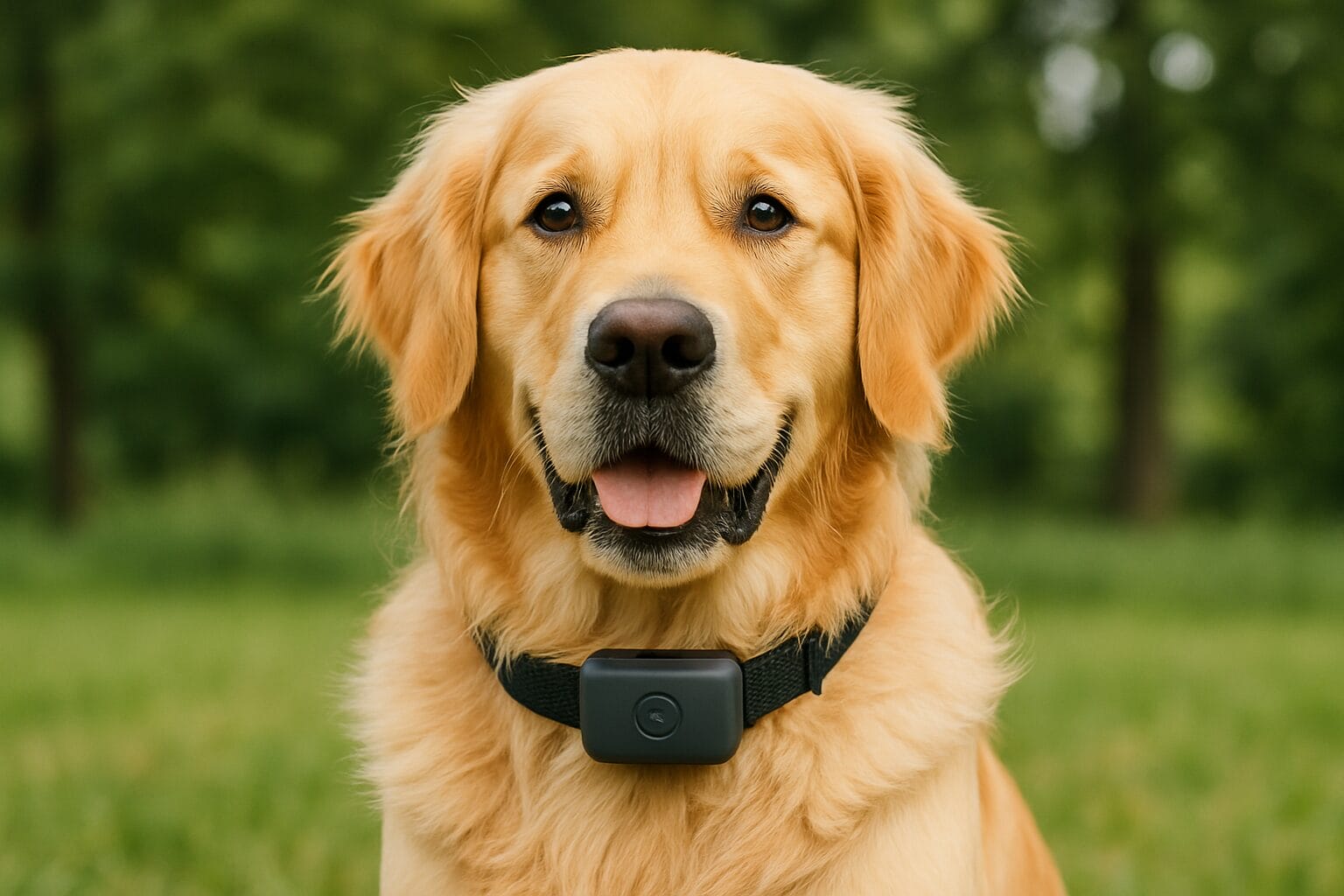
GPS dog trackers without monthly fees: what to look for in a subscription-free tracker
GPS dog tracker without subscription: what it really means and how to choose one
Search for a “GPS dog tracker without subscription” and you’ll find dozens of product roundups promising freedom from monthly fees. What most of them skip over is the fine print: many devices sold under that banner aren’t true GPS trackers at all, and “no subscription” doesn’t always mean “no ongoing cost.” Before you spend money on a device that can’t actually find your dog when it matters, it helps to understand what the phrase really means and where the trade-offs hide.
This guide breaks down the technology, the real costs over time, and the features that matter most, so you can choose a tracker that fits how you and your dog actually live.
What “GPS dog tracker without subscription” actually means
“No subscription” refers to one thing: you don’t pay a recurring monthly or annual fee to use the device. That’s it. It does not guarantee the tracker uses satellites, works over long distances, or shows your dog’s live location on a map.
This is where marketing gets muddy. A lot of products labeled “GPS” or “no subscription” are really Bluetooth proximity tags or radio-frequency locators. They avoid subscriptions because their technology doesn’t require a cellular data plan, but they also can’t do what most people picture when they imagine tracking a lost dog across open land.
So the honest question isn’t just “does it have a subscription?” It’s “what technology does it use, and does that technology match how I need to find my dog?” The rest of this article walks through that answer.
How dog trackers work without a monthly fee
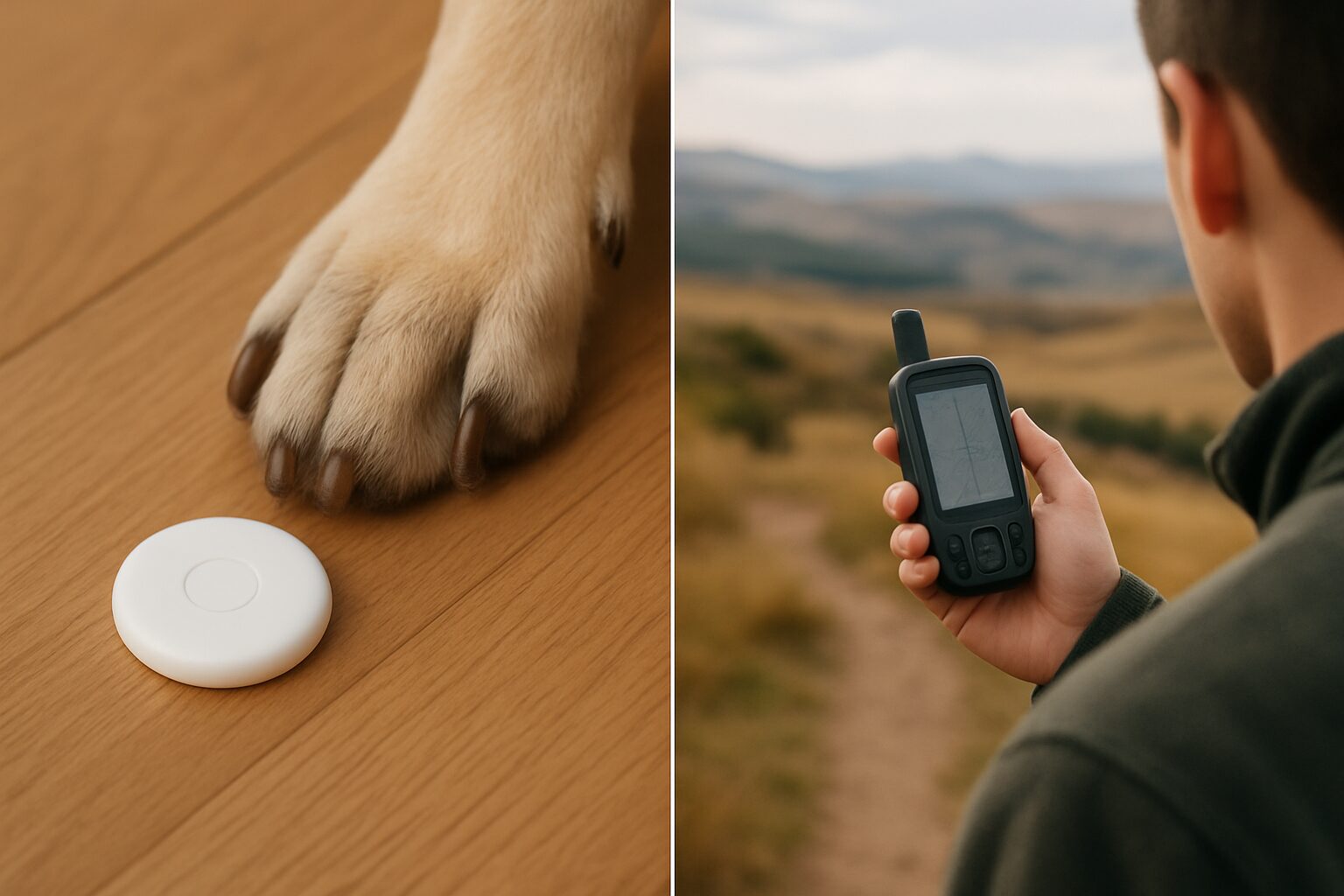
Whether a tracker needs a subscription comes down to how it transmits location data. Some methods send data over a cellular network, which costs the manufacturer money every month, so they pass that cost to you as a subscription. Other methods send data directly to a device you own, with no network in between, so there’s nothing to bill you for.
Here are the three technologies you’ll encounter, and why each one is or isn’t tied to a fee.
Bluetooth trackers
Bluetooth tags are the smallest and cheapest option. They connect to your phone directly, which is why they never need a subscription. The catch is range: Bluetooth typically reaches only about 30 to 100 feet, roughly the size of a home or yard.
That makes them useful for finding a dog who’s hiding under a bed or in the backyard, but useless for a dog who has bolted across a field or slipped out of the neighborhood. Some brands extend range through a community network of other users’ phones, but that only helps in dense areas and offers no live tracking.
Think of Bluetooth tags as proximity finders, not location trackers. They tell you “warm or cold,” not “here’s exactly where your dog is.”
Radio-frequency (RF) trackers
RF trackers are a favorite among hunters. They transmit a signal from the dog’s collar to a handheld receiver you carry, giving you direction and distance without any cellular network involved. That’s why they carry no subscription.
The strength of RF is line-of-sight range, which can stretch a mile or more in open terrain. The weaknesses are just as real. Hills, dense timber, and canyons block or distort the signal, so effective range shrinks in the exact places dogs tend to disappear. You also have to carry and manage a dedicated handheld, and most RF systems offer no map, no location history, and no way to check on your dog from your phone.
For a houndsman working a familiar area, RF can be excellent. For everyday pet recovery, it’s clunky.
True GPS trackers
A true GPS tracker uses satellites to pinpoint your dog’s location anywhere on the planet, with accuracy down to a few meters. The device knows where it is regardless of terrain or distance.
The complication is getting that location from the collar to you. Satellites tell the device where it is, but the device still has to transmit that position to your phone. Most consumer GPS trackers do this over the cellular network, the same way your phone sends texts. Cellular access costs the manufacturer a monthly fee per device, and that’s the single biggest reason so many GPS dog trackers charge a subscription.
Subscription-free GPS models are structured differently. Some transmit over networks the manufacturer has already accounted for in the purchase price, and some are built for professional and long-deployment use where the cost is bundled into the hardware. The key is that you get real satellite positioning without a recurring bill, which is exactly what most buyers want when they search for a subscription-free tracker.
Subscription vs. no-subscription trackers: the real trade-offs
Paying a monthly fee sometimes buys genuine value and sometimes buys you very little. Here’s where the differences actually show up.
Coverage and range. Subscription cellular trackers work anywhere there’s a signal, which is their main advantage. Bluetooth and RF no-subscription devices are limited to short range or line-of-sight. A subscription-free true GPS device closes much of that gap, which is why the underlying technology matters more than the billing model.
Real-time updates. Some subscription plans offer very frequent location refreshes, updating every few seconds during active tracking. No-subscription devices vary widely; some update on demand or at set intervals. If you need second-by-second movement, check the refresh rate carefully regardless of the payment model.
Location history and geofencing. Features like saved location history and virtual boundaries that alert you when your dog leaves a safe zone are often bundled into subscriptions. Some no-subscription devices include them; others don’t. Decide which of these you’ll actually use before paying for them.
The honest takeaway: a subscription can be worth it if you genuinely need constant real-time updates across wide areas. For most owners tracking a dog on their property or recovering a pet that wandered off, a well-built subscription-free device covers the real need without the ongoing cost.
Hidden costs to watch for with “no subscription” devices
“No subscription” and “no ongoing cost” are not the same thing. Watch for these before you assume you’re getting a free ride:
- Batteries and charging accessories. Devices that run on replaceable batteries or need frequent recharging carry a small but real recurring cost and hassle.
- Required hardware. RF systems need a handheld receiver. Some Bluetooth systems lean on base stations. These add-ons can cost as much as the tracker itself.
- Paid app upgrades. Some “free” devices lock useful features behind in-app purchases or premium firmware tiers, which is a subscription by another name.
- Short device lifespan. A cheap tracker that fails or degrades in a year means buying another one. Two or three replacements erase any savings over a durable device.
To find the true cost of ownership, add the purchase price, required accessories, battery replacements, and expected replacements over three to five years. A device that costs more upfront but lasts a decade often works out cheaper than a bargain tag you replace every season.
Why battery life matters more than upfront price

A tracker is only useful when it’s powered. The moment your dog goes missing is the worst possible time to discover the battery died two days ago. This is the single most overlooked factor in subscription-free trackers, and it’s where cheap devices quietly fail.
Battery expectations vary by type. Bluetooth tags often last several months on a coin cell. Many cellular GPS trackers need charging every few days to a couple of weeks because constant data transmission drains power fast. RF collars fall somewhere in between depending on use.
Long battery life does more than reduce charging chores. It eliminates a recurring hidden cost, removes the risk of a dead device at the critical moment, and means the tracker is always ready. LoneStar Tracking builds devices with battery life of up to 10 years, which turns the tracker into a set-and-forget tool rather than one more gadget to keep charged. For a ranch dog or a working animal, that reliability is worth far more than a low sticker price.
Features to prioritize when choosing a no-subscription tracker
Match the device to how you’ll actually use it:
- Real GPS vs. Bluetooth/RF. If you need to locate a dog beyond your yard, insist on true GPS. Don’t let the “GPS” label alone fool you.
- Range and coverage. Confirm the device works across the distances and terrain you deal with, whether that’s a fenced yard or hundreds of acres.
- Durability and water resistance. Outdoor and working dogs put gear through mud, water, brush, and impact. Look for rugged, waterproof housing.
- Battery longevity. Prioritize the longest reliable battery life you can get, especially for dogs that spend real time outdoors.
- Data privacy and encryption. Your dog’s location is also your location. Make sure that data is protected.
- Ease of setup and app usability. A tracker you find confusing is a tracker you won’t trust in an emergency.
How your dog’s location data is protected
Location data is more revealing than it looks. A record of where your dog goes maps directly onto where you live, when your property is empty, the paths you walk, and the routines you keep. In the wrong hands, that information is a security risk, not just a privacy concern.
Many budget trackers transmit or store this data with weak protection or none at all. Unencrypted location data can potentially be intercepted or exposed, handing strangers a detailed picture of your movements and your property.
Encryption scrambles that data so only you and your authorized app can read it. It protects against interception, unauthorized access, and misuse of the patterns your dog’s movement reveals. This is a factor almost every product roundup ignores, and it’s one of the most important. LoneStar Tracking is the only company that encrypts all of your data, because your location history should belong to you and no one else.
Which dog owners benefit most from a subscription-free model
A subscription-free device fits some situations better than others:
- Ranch and property owners tracking dogs across land they know benefit from durable, long-battery devices without a monthly bill for every collar.
- Hunters need rugged field gear that holds up to weather and terrain, and value not paying a fee during the off-season.
- Everyday pet parents who mainly want peace of mind and quick recovery of a wandering dog get what they need without an open-ended cost.
A subscription plan may make more sense if you truly require constant real-time tracking across large, unfamiliar areas with frequent updates and advanced live features. For most owners, though, a well-built subscription-free tracker delivers the reliability that matters without the recurring drain.
Setting up and getting the most from your tracker
Get the basics right and the device will be ready when you need it:
- Fit it properly. Attach the tracker securely to a well-fitted collar so it can’t slip or snag, and confirm it sits comfortably.
- Test range and signal. Before you rely on it, walk your typical areas and confirm the device reports accurately across your property, trails, or hunting ground.
- Build battery habits. Even with long-life batteries, check the device periodically and know its status. Make it part of your routine, not an afterthought.
- Set up safe zones and routines. Where the device supports boundaries or alerts, define the areas your dog normally stays within so you’re notified early. Knowing your recovery steps in advance turns a scare into a quick reunion.
A subscription-free GPS dog tracker can absolutely deliver reliable, private, low-cost tracking, as long as you choose one built on real GPS, long battery life, and encrypted data rather than a low price and a misleading label.
Do no-subscription GPS dog trackers really work with no ongoing costs?
They can, but check the full picture. “No subscription” only means no recurring service fee. Some devices still carry costs through replaceable batteries, required handhelds or base stations, or paid app upgrades. Add up accessories, battery use, and expected replacements over several years to see the true cost.
What’s the difference between a Bluetooth tracker and a true GPS tracker?
A Bluetooth tracker connects to your phone over short range, typically within a home or yard, and works as a proximity finder rather than a location tracker. A true GPS tracker uses satellites to pinpoint your dog’s location anywhere, then transmits that position to you, making it the only option for finding a dog that has traveled any real distance.
How far can a subscription-free dog tracker locate my dog?
It depends entirely on the technology. Bluetooth reaches roughly 30 to 100 feet. RF trackers can cover a mile or more in open, line-of-sight terrain but lose range in hills and timber. A true GPS device can locate your dog across virtually any distance, as long as it can transmit that location back to you.
How long does the battery last on a no-subscription GPS dog tracker?
It varies widely. Some cellular GPS trackers need recharging every few days, while Bluetooth tags can last months. Battery life is one of the most important factors to check, because a dead tracker is useless. LoneStar Tracking devices offer battery life of up to 10 years, removing frequent charging and replacement from the equation.
Is my dog’s location data secure on a no-subscription tracker?
Not always. Many budget devices offer weak protection or none, which can expose sensitive patterns about you and your property. Encryption is what keeps that data private and readable only by you. LoneStar Tracking encrypts all user data, so your dog’s location history stays yours alone.