Hardwired vs. battery-powered GPS trackers: which is right for your vehicle or asset
Hardwired vs battery GPS tracker: how to choose the right one
Choosing between a hardwired and a battery-powered GPS tracker is one of the first real decisions you’ll make before buying, and it’s easy to get pushed toward the wrong answer. Plenty of guides declare one type the winner. The truth is more useful: the right tracker depends on what you’re tracking, why, and how you plan to manage it over time.
This guide skips the verdict and gives you a decision framework instead. We’ll compare hardwired and battery trackers across the factors that actually matter—power source, installation, battery life, concealment, reporting frequency, use case, and data security—so you can match the tracker to your situation and buy once.
Hardwired vs battery GPS trackers at a glance
The core difference is simple: a hardwired tracker draws power directly from the asset it’s mounted on, while a battery tracker carries its own self-contained power supply and works independently.
That single distinction drives nearly every other tradeoff, from how you install the device to how well you can hide it and how often it can report. Neither type is universally better. A hardwired unit that’s perfect for a delivery van is a poor fit for a shipping container with no power source. A battery tracker that’s ideal for covert placement may not be the answer for a full-time fleet vehicle you want to monitor in real time around the clock.
Over the next sections, we’ll walk through each deciding factor and finish with a straightforward framework. As you read, keep two questions in mind: what am I tracking, and what do I need it to do?
The core difference: how each tracker is powered
Hardwired trackers connect directly to a vehicle’s electrical system. Once wired in, they draw continuous power, so you never think about charging them. As long as the vehicle has power, the tracker stays alive.
Battery trackers run on an internal battery and don’t need anything from the asset. That independence is their whole advantage—they can go on things that have no power to give.
This is why power source is the foundation of the decision. It determines installation effort, portability, where you can place the device, how often it can report, and how much maintenance you’ll deal with down the road.
The clearest way to sort it out is to ask what you’re actually tracking. Cars, trucks, vans, and heavy machinery all have electrical systems you can tap into, which makes hardwiring an option. Trailers, shipping containers, cargo, generators, and stored equipment often have no accessible power at all. For those, a self-contained battery unit isn’t just convenient—it’s the only realistic choice.
Installation, effort, and cost
Installation is where the two types diverge the most in day-to-day terms.
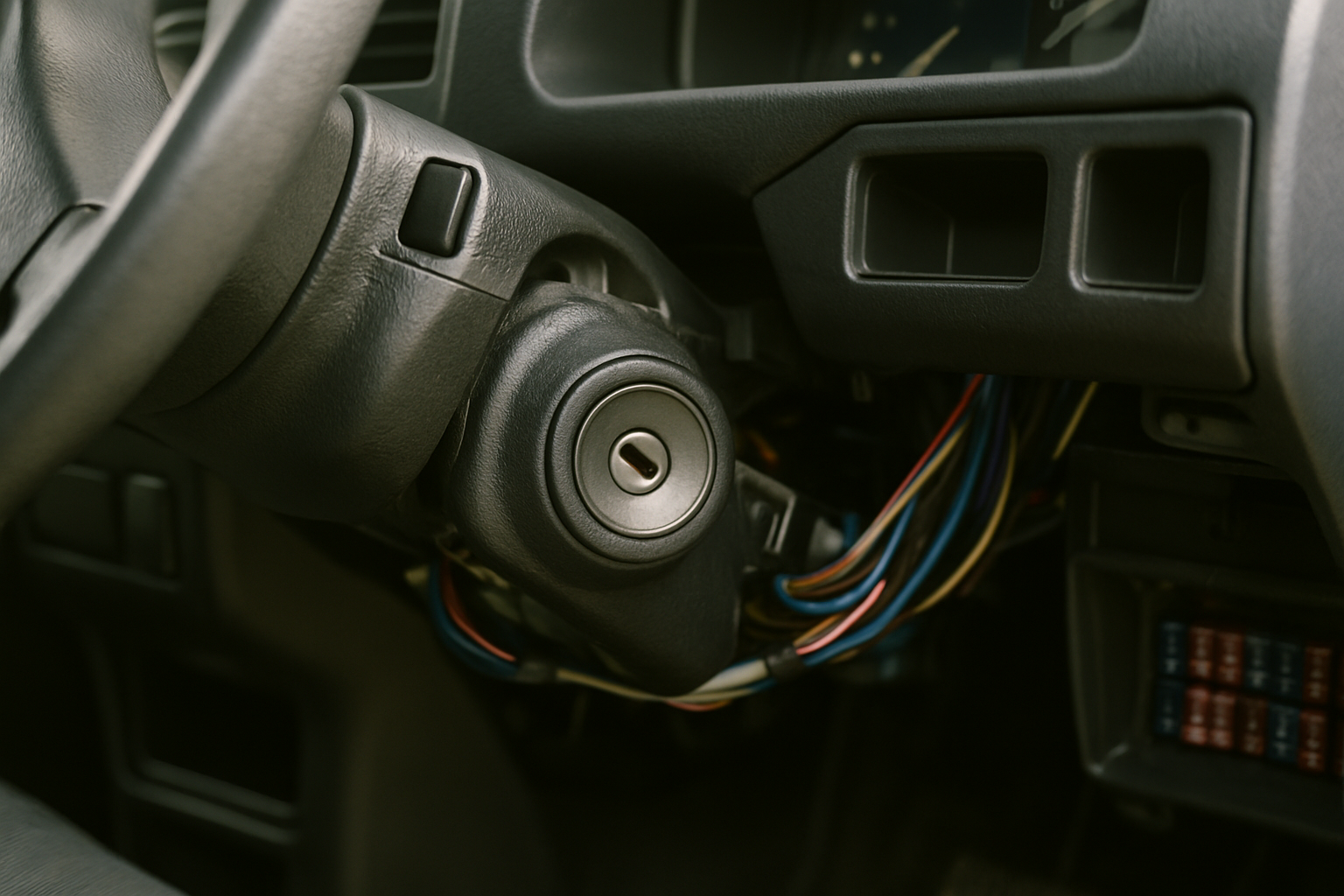
A hardwired tracker requires wiring into the vehicle’s electrical system, usually near the battery, ignition, or fuse box. That means either a professional install or careful DIY work, and it ties the device to one specific vehicle. Installation takes longer, and moving the tracker later means uninstalling and reinstalling. For a single car this is manageable; across a large fleet, the labor hours and vehicle downtime add up fast.
A battery tracker is closer to attach-and-go. Many use magnetic mounts that let you place the unit in minutes and move it between assets just as quickly. There’s no wiring, no professional install, and no downtime.
On cost, look past the sticker price. Hardwired units may carry lower ongoing hassle once installed, but the install labor is a real expense—especially when multiplied across dozens of vehicles. Battery units cut installation cost to nearly zero but historically traded that for recharge and replacement cycles. As we’ll cover next, ultra-long battery life changes that equation.
Battery life and maintenance

Maintenance is where the old advice starts to break down.
Hardwired trackers never need recharging because they’re always drawing power. The catch: they stop reporting the moment they’re disconnected or if the vehicle battery dies. A thief who finds the wiring can cut power, and a vehicle sitting in long-term storage with a dead battery goes dark.
Standard battery trackers avoid that dependency but have traditionally come with a real drawback: short recharge or replacement cycles. Some need topping up every few days or weeks, and higher reporting frequency drains them faster—every ping to the network costs power. For a fleet or a hard-to-reach asset, constant recharging is a genuine burden.
This is where LoneStar changes the math. Our battery trackers deliver up to 10 years of battery life, which removes the traditional maintenance penalty that made people default to hardwired. You get the placement freedom and independence of a battery unit without the recharge treadmill. For non-powered assets—trailers, containers, and stored equipment—a device you can set and forget for years reshapes the whole comparison.
Concealment and theft recovery
If you want a tracker no one can find, power source matters again.
Battery trackers can be hidden almost anywhere because they need no wiring. Inside a seat cushion, in a cargo compartment, tucked into equipment, or magnet-mounted under a chassis—placement is limited only by signal, not by a wiring harness. That flexibility makes them the natural choice for covert use and theft recovery, where the goal is a device a thief won’t spot or disable.
Hardwired trackers are harder to see at a glance since they’re integrated into the vehicle, but they’re confined to placement near the electrical system. Someone who knows where to look—near the battery or fuse box—has a smaller search area, and cutting the power kills the tracker.
For theft recovery and protecting high-value assets, the battery tracker’s concealment and independence from vehicle power are strong advantages. If a thief tows a trailer or drives off a stored vehicle, a hidden battery unit keeps reporting regardless of what they do to the wiring. Battery units also move between vehicles and assets in minutes, so one device can protect whatever needs it most this month.
Reporting frequency and real-time tracking
How often a tracker reports its location depends heavily on its power supply.
Hardwired trackers have continuous power, so they can report frequently without any penalty. That makes them well suited to true real-time monitoring—constant pings that show a vehicle’s live position, ideal for dispatch, routing, and active fleet oversight.
Battery trackers balance reporting frequency against battery drain. More frequent updates mean shorter battery life, so these units are often set to report at intervals—every few minutes, hourly, or on movement. The trick is matching the interval to your actual need. A stored asset that only needs a location check once a day can run for years on a light schedule, while a device set to constant real-time pings burns power much faster.
Ask yourself how current your data really needs to be. For live dispatch of active vehicles, frequent updates from a powered device make sense. For confirming an asset is where it should be, or getting alerted when it moves, near-real-time updates are usually plenty—and they let a long-life battery unit stretch its charge for years.
Data security and privacy
Whatever tracker you choose, it produces a continuous record of where your vehicles, assets, or family go. That location data is sensitive, and it deserves protection regardless of tracker type.
Here’s the gap most buyers never think to check: many providers transmit or store location data without strong protection. That data can be intercepted or exposed, and few competitors mention it at all. Even your phone quietly shares location data with third parties in ways most people never realize.
Encryption is what closes that gap. It keeps your location history readable only by you, whether you’re a business protecting fleet routes and customer stops or an individual protecting your own movements. For a company, exposed tracking data can reveal operations, client locations, and schedules to anyone who intercepts it. For a personal user, it’s simply your privacy.
LoneStar encrypts all of your data as a standard—not an upgrade or an add-on. We’re the only company that encrypts everything, because location privacy shouldn’t depend on which plan you bought. Whether you choose hardwired or battery, your data stays protected.
Which type fits B2B fleets vs personal and asset tracking
Matching tracker type to use case makes the decision much clearer.
B2B fleets: Full-time company vehicles with steady power and a need for constant real-time monitoring are a natural fit for hardwired trackers. When a vehicle runs daily and you want live dispatch data, continuous power supports the frequent reporting a fleet operation depends on.
Personal vehicles and covert use: Battery trackers offer flexibility and easy concealment. If you want to hide a device, move it between cars, or track without a permanent install, a battery unit is the practical answer.
Non-powered assets: Trailers, containers, generators, and equipment have no power to hardwire into, so long-life battery units are the only sensible option. This is also true for equipment rental fleets and specialized cases like tracking cattle or livestock, where there’s simply nothing to wire into.
Mixed fleets often use both—hardwired on the trucks, long-life battery units on the trailers and equipment they haul. There’s no rule that says you have to pick one type for everything.
A simple decision framework
Run your situation through these questions and the answer usually appears on its own.
Choose hardwired if:
– The asset has reliable, continuous power
– Tracking is permanent and the device won’t move between vehicles
– You want set-and-forget real-time monitoring with frequent reporting
Choose battery if:
– You need concealment for theft recovery or covert tracking
– You want portability to move the device between assets
– You’re tracking non-powered assets like trailers, containers, or equipment
The four questions to ask:
1. Does the asset have power to tap into?
2. Do you need to move the tracker between assets?
3. How often does it really need to report?
4. How long do you want between maintenance visits?
Here’s where LoneStar shifts the traditional calculus. The two classic knocks against battery trackers—short battery life and no encryption—don’t apply here. With up-to-10-year battery life, a battery unit can be as close to set-and-forget as a hardwired one, without the install labor or the risk of a thief cutting power. And with encryption standard on every device, your data stays private no matter which type you choose. That makes battery trackers a stronger contender than the usual advice suggests, especially for non-powered assets and theft recovery.
Frequently asked questions
Can a hardwired GPS tracker drain my vehicle’s battery?
A properly installed hardwired tracker draws very little power and generally won’t drain a healthy battery during normal use. The risk rises if a vehicle sits unused for long stretches, since a small continuous draw can add up over weeks. Quality units are designed to minimize this, but for vehicles in long-term storage, a self-contained battery tracker avoids the concern entirely.
How long does a battery-powered GPS tracker actually last?
It varies widely by device and by how often it reports. Many standard battery trackers last days to weeks between charges, and frequent reporting shortens that further. LoneStar’s battery trackers are built for up to 10 years of life, which removes the constant recharging that makes people avoid battery units in the first place.
Which is harder for a thief to find or disable, hardwired or battery?
Battery trackers are usually harder to disable because they can be hidden anywhere and don’t depend on the vehicle’s power—cutting the wiring does nothing. Hardwired trackers are integrated into the vehicle but sit near known locations like the battery or fuse box, giving a knowledgeable thief a smaller area to search and a way to kill power.
Do battery trackers give real-time tracking or only periodic updates?
Battery trackers can do both, but there’s a tradeoff. More frequent updates give you closer to real-time tracking at the cost of battery life, while longer intervals extend battery life. For live dispatch of active vehicles, a powered hardwired unit is often the better fit; for asset monitoring and theft alerts, near-real-time updates from a battery unit are usually more than enough.
Is my location data secure with either type of tracker?
Security depends on the provider, not the tracker type. Many companies transmit or store location data without strong protection, which can leave it exposed. LoneStar encrypts all data as a standard on every device, hardwired or battery, so your location history stays private whether you’re protecting a business fleet or your own vehicle.