

GPS tracking for motorhomes and RVs: theft protection on the road and in off-season storage
GPS tracker for RV: what actually matters for theft protection, storage, and remote travel
An RV is one of the most expensive things most people own, and it spends a lot of its life sitting unattended — in a storage lot, a driveway, or a campsite while you’re off exploring. That combination of high value and low supervision makes a GPS tracker one of the smartest investments you can make in your rig.
Most buying guides treat an RV like any other vehicle and hand you a list of consumer trackers. But an RV has specific realities that generic advice ignores: it sits idle for months at a time, it travels to remote places with spotty cell service, and its location history quietly reveals where you live and where you keep tens of thousands of dollars of property. This guide focuses on what actually matters for a GPS tracker for RV use, and why battery life and data privacy deserve far more attention than they usually get.
Why RV owners need a GPS tracker
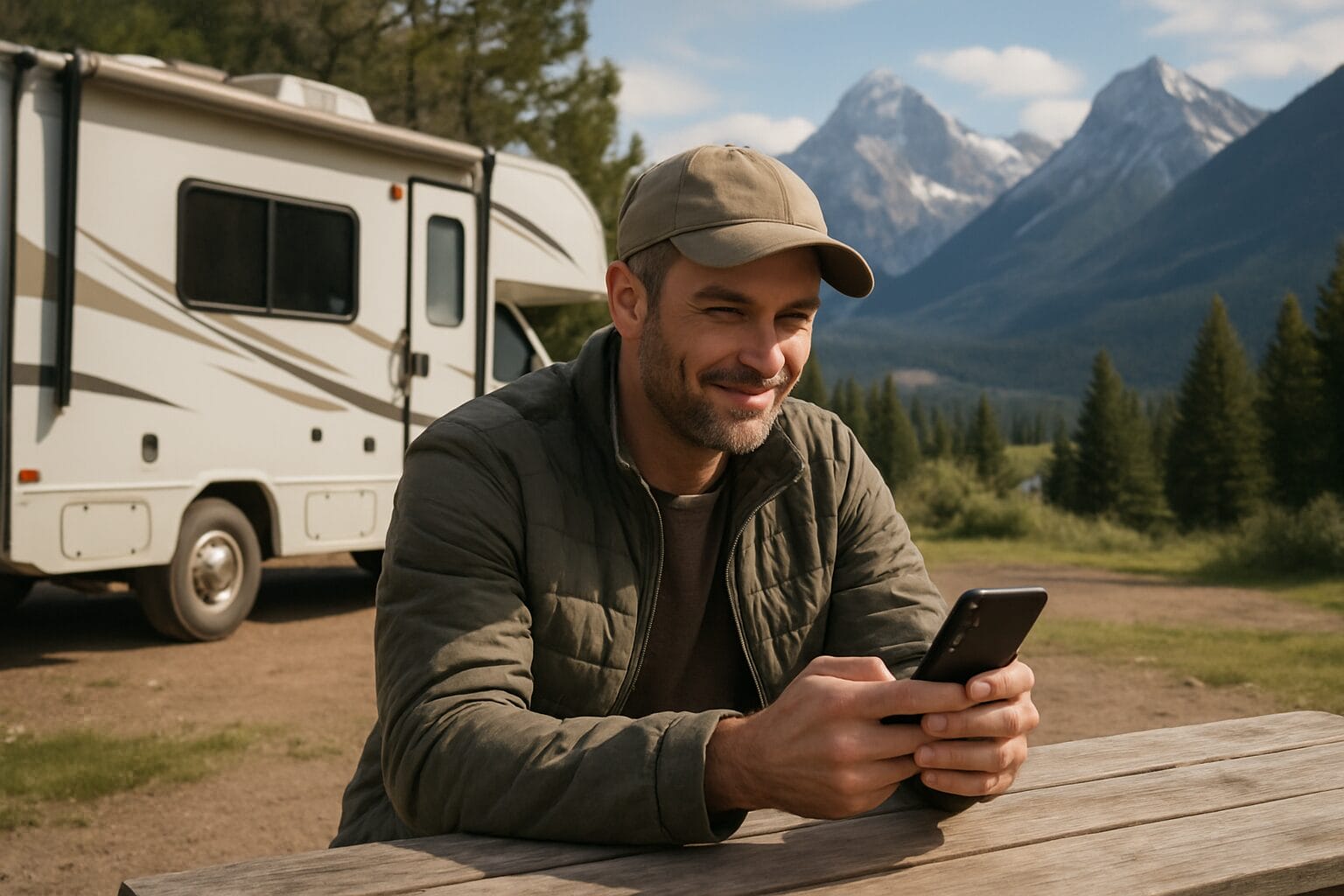
RVs are attractive targets precisely because they’re often left alone. A travel trailer parked in a storage yard, a fifth wheel behind the house, or a motorhome at a campground can go days or weeks without anyone laying eyes on it. Thieves know this.
A GPS tracker changes the equation in a few concrete ways:
- Theft recovery. If your rig is stolen, a tracker gives law enforcement a live location to act on instead of a description and a paperwork trail. Recovery odds go up dramatically when police can see exactly where the vehicle is right now.
- Storage monitoring. You get an instant notification if your RV is moved, towed, or tampered with — even if you haven’t visited the storage lot in two months.
- Remote travel peace of mind. Park the rig at your campsite, drive off to explore in a toad or truck, and still see that everything is where you left it. You can also share the location with family so they know where you are.
- Fleet and rental oversight. Operators renting out RVs or running a fleet need to monitor location, utilization, and unauthorized use. A tracker verifies that renters stay within agreed areas and that units are where the schedule says they should be.
The features that matter most in an RV GPS tracker
Think of this section as a buyer’s checklist built around RV realities rather than a generic consumer feature list. All the usual boxes — real-time tracking, alerts, an app — matter, but two factors decide whether a tracker actually protects an RV over the long haul: battery life and data privacy. Those are the two things most guides barely mention, and they’re the ones that separate a device that works when you need it from one that quietly died in storage months ago.
Long battery life for RVs left in storage
This is the single most overlooked spec for RV owners. If your rig sits in storage from October to April, a tracker that needs charging every month is worse than useless — it will be dead exactly when you’re not around to notice.
Look for multi-year battery life. LoneStar Tracking devices run up to 10 years on a single charge, which means the tracker keeps working through every off-season without any maintenance from you. You set it and forget it, confident it’s still reporting.
Battery life isn’t a fixed number, though — it’s directly tied to how often the device reports. A tracker checking in every few seconds burns power fast; one reporting a few times a day sips it. The right approach is to balance reporting frequency with your use case: infrequent check-ins for a stored rig, more frequent updates when you’re actively traveling or recovering a stolen vehicle. Good trackers let you adjust this so you’re not wasting battery when nothing is happening.
Reliable coverage in remote camping areas
RVs go where the cell towers are thin. National parks, backcountry pull-offs, rural highways, and remote storage lots are exactly the places where budget trackers lose signal and go silent.
Prioritize a tracker that runs on nationwide carrier networks with strong rural coverage, not a device tied to a single weak network or short-range Bluetooth. Bluetooth trackers like AirTags only work when someone else’s phone happens to pass nearby — useless in the backcountry.
Also understand how a device behaves when it temporarily loses signal. Quality trackers use store-and-forward reporting: they log location data while offline and transmit it as soon as coverage returns, so you don’t lose the trail. A device built for reliability consistently outperforms budget OBD or Bluetooth options in exactly the places RVers travel.
Real-time tracking and location history
Two different capabilities matter here. Real-time tracking gives you a live location, which is what actually drives recovery during a theft in progress. Location history stores where the rig has been, which is valuable for trip logs, fleet auditing, or verifying that a rental was used within agreed limits.
Set realistic expectations on update intervals. A hardwired, always-powered tracker can update near-continuously. A battery-powered device balances update frequency against battery preservation — perfectly responsive when you need it, conservative when the rig is parked. If live updates for a daily-driven vehicle are your priority, our real-time GPS tracker guide for cars breaks down how live location works in more detail.
Geofencing and movement alerts
Geofencing lets you draw a virtual boundary around a location — a storage lot, your driveway, or a campsite. If the RV crosses that line, you get an instant alert. Movement alerts work similarly, notifying you the moment the rig starts moving when it shouldn’t be.
This is enormously valuable for stored and seasonal rigs you can’t check in person. Instead of driving to the storage yard to confirm everything’s fine, you simply trust that no alert means no movement. And when an alert does fire, you get a head start — the difference between calling police while the thief is still nearby versus discovering the theft days later.
Data privacy and encryption
Here’s the factor almost every guide skips. Your location history is deeply personal data. It shows where you live, the routes you travel, and — critically — where you store a valuable, often-unattended asset. In the wrong hands, that’s a roadmap for a thief.
Many consumer trackers store or transmit location data with weak protection, and some share it with third parties. That turns a security device into a privacy liability. LoneStar Tracking encrypts all user data, which most competitors don’t do. We wrote more about why this matters in our piece on how location data gets shared and how encryption protects you.
For an RV owner, encryption isn’t a nice-to-have. It’s a deciding factor for your personal safety.
Hardwired vs. battery-powered GPS trackers
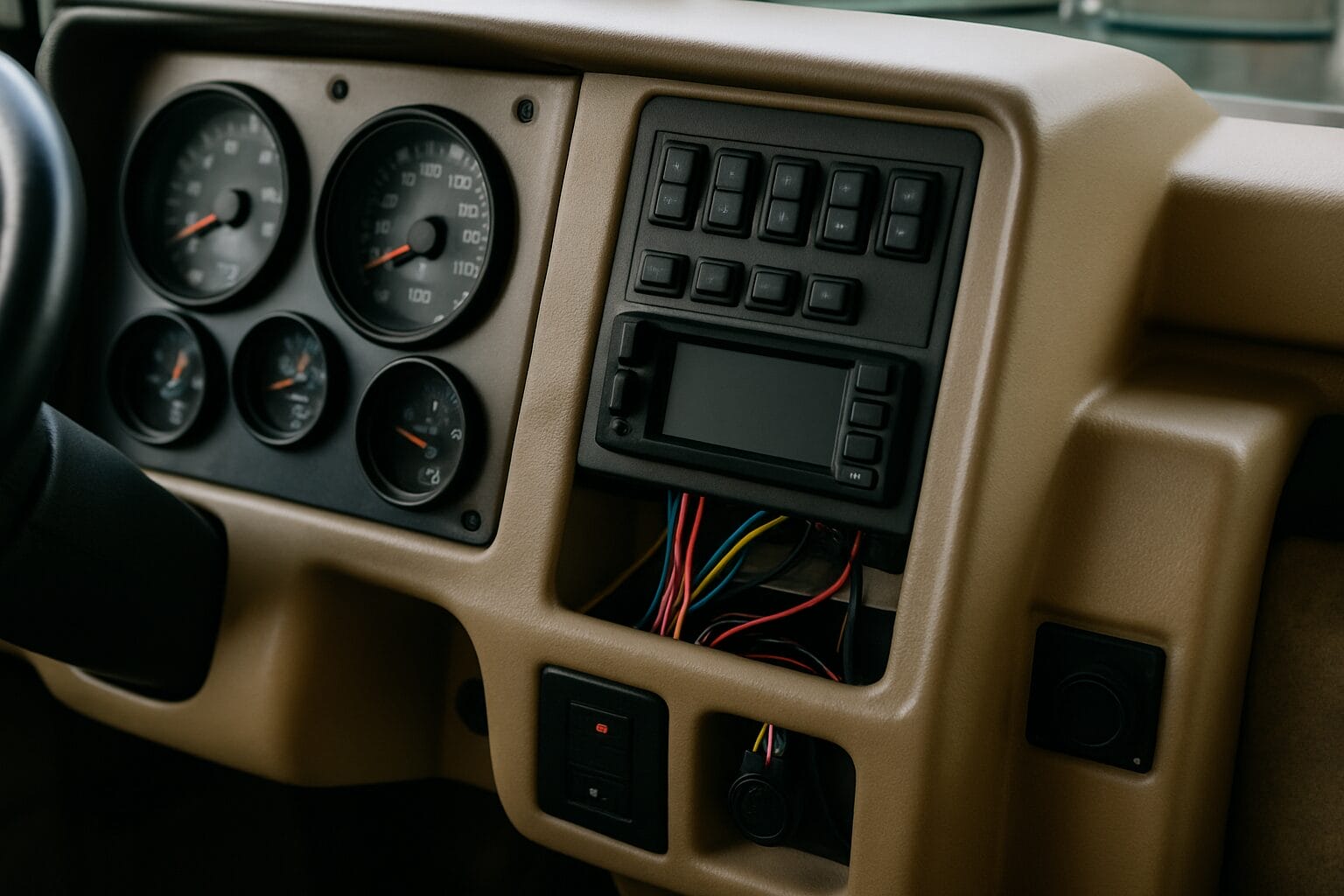
There are two broad categories, and the right choice depends heavily on how you use your rig.
Hardwired trackers draw power from the RV’s electrical system, so they’re always powered and never need charging. They’re a strong fit for actively used motorhomes. The trade-offs: installation requires wiring knowledge (or a professional), and if a thief disconnects the battery, the tracker loses power unless it has a backup cell.
Battery-powered trackers are fully self-contained and portable. You can hide one anywhere — no wiring, no dependence on the RV’s power. They’re ideal for stored rigs, towables, and trailers that don’t provide constant power. The trade-off is that battery life matters enormously, which is exactly why multi-year battery capacity is such a big deal.
For most RV owners, battery-powered often wins. The long storage periods that define RV ownership are precisely where a self-contained, multi-year tracker shines — and it can’t be defeated by cutting the vehicle’s power.
How to install and set up a GPS tracker on an RV
Setup is straightforward for either type.
Battery-powered: Place the device discreetly. Good spots include a storage compartment, a cabinet, under a seat, or another hidden interior location where a thief won’t stumble across it but where it still has a clear enough path for signal. No tools required.
Hardwired: Connect the device to a switched or constant power source. This is best done professionally, or by someone comfortable with basic 12V wiring. Conceal the wiring so it isn’t obvious.
Once it’s physically in place:
- Activate the device and pair it with the tracking app or platform.
- Set geofences and alert preferences before you store or travel — around your storage lot, driveway, or planned campsite.
- Test signal and reporting so you know it’s live. Walk away, check that the location updates, and confirm alerts arrive. Never rely on a tracker you haven’t verified.
Costs and subscription fees to expect
Most cellular GPS trackers require a data plan or subscription, because the device uses a cellular network to relay its location to you. That’s what makes real-time, nationwide tracking possible.
A typical subscription covers the cellular data, app and platform access, alert delivery, and location history storage. When you weigh that recurring cost, compare it against the value of the asset you’re protecting — a modest monthly fee is trivial next to a five- or six-figure RV.
Read the terms carefully. Watch for hidden activation charges or long contract lock-ins. If you’d rather avoid recurring fees entirely, it’s worth understanding the trade-offs, which we cover in our guide to GPS trackers without monthly subscriptions — the principles apply beyond pet trackers.
Choosing the right tracker for your situation
Match the tracker to how you actually use your rig:
- Full-time RVer: Prioritize strong nationwide coverage, responsive real-time tracking, and portability so the device moves with you and works wherever you roam.
- Seasonal storage: Prioritize multi-year battery life and reliable geofence and movement alerts. You want a device that survives the off-season untouched and pings you the instant anything changes.
- Rental or fleet operator: Prioritize detailed location history, multi-device management, and utilization data. Our fleet GPS tracking guide goes deeper on managing multiple units at once.
The quick summary: for nearly every RV owner, the deciding trio is long battery life so the tracker never dies in storage, reliable remote coverage so it works where you travel, and encrypted data so your location history stays private. Get those three right and everything else falls into place.
Frequently asked questions
How long should the battery last on an RV GPS tracker?
For an RV that sits in storage for months, aim for multi-year battery life. LoneStar Tracking devices run up to 10 years on a single charge, so the tracker keeps working through every off-season without charging or maintenance. Actual life depends on how frequently the device reports — less frequent check-ins extend battery life significantly.
Will a GPS tracker work in remote areas with poor cell service?
A quality tracker on a nationwide carrier network with strong rural coverage will work in most places RVers travel. When signal drops temporarily, store-and-forward reporting logs the location and transmits it once coverage returns, so you don’t lose the trail. Bluetooth trackers, by contrast, are unreliable in remote areas because they depend on nearby phones.
Do RV GPS trackers require a monthly subscription?
Most cellular trackers require a data plan or subscription because they rely on a cellular network to relay location in real time. The subscription typically covers data, app access, alerts, and location history. Compare the cost against your RV’s value, and watch for hidden activation fees or contract terms.
Is my RV location data secure and private?
It depends entirely on the provider. Many consumer trackers store or share location data with weak protection, which is a real risk since your history reveals where you live and store your rig. LoneStar Tracking encrypts all user data, unlike most competitors, so your location stays private.
What’s the best type of tracker for an RV kept in storage?
A battery-powered tracker with multi-year battery life is usually the best fit for stored rigs. It’s fully portable, needs no wiring or constant power, can’t be defeated by cutting the vehicle’s electrical system, and — paired with geofencing and movement alerts — notifies you instantly if the RV is moved while you’re away.